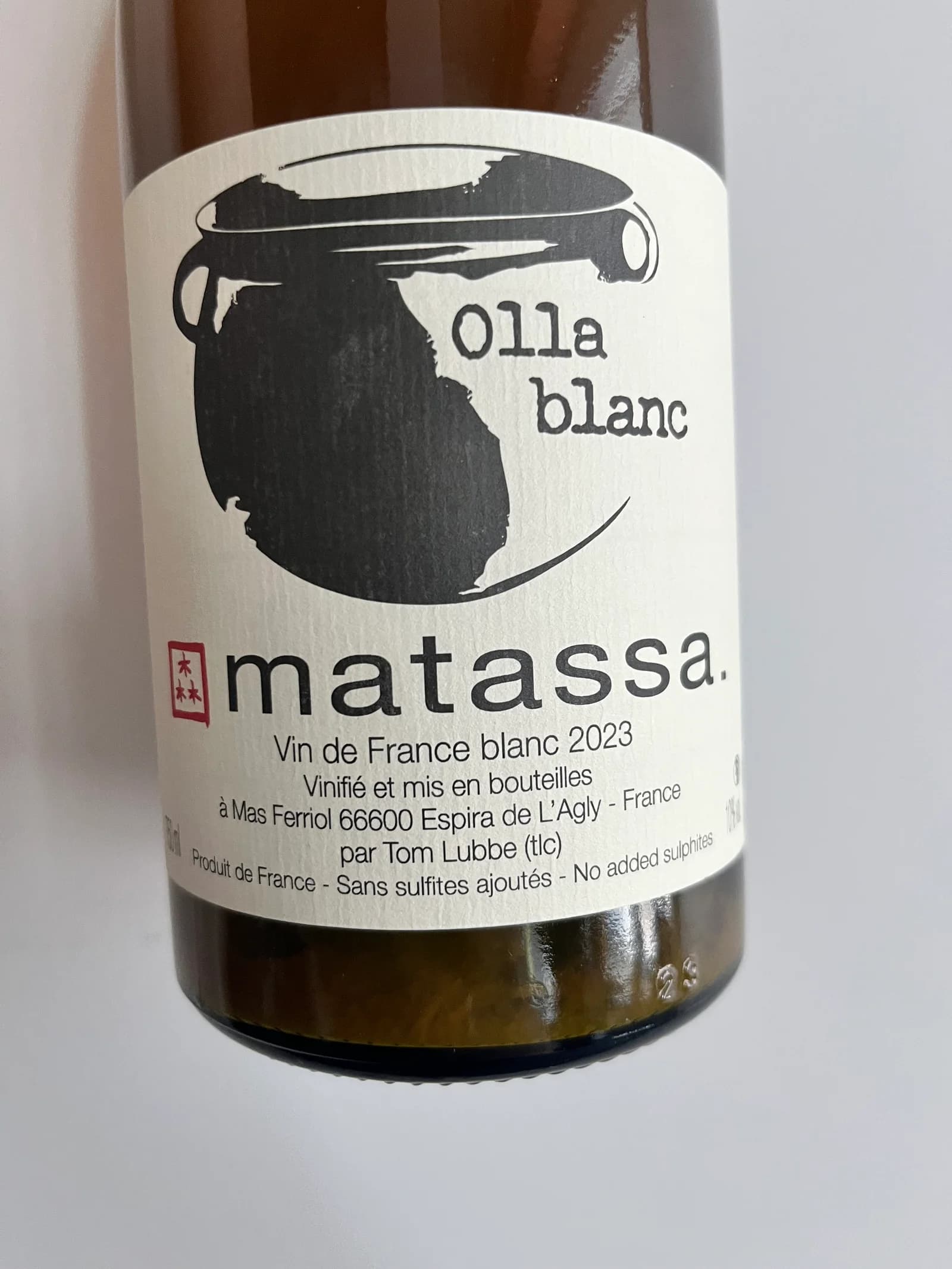
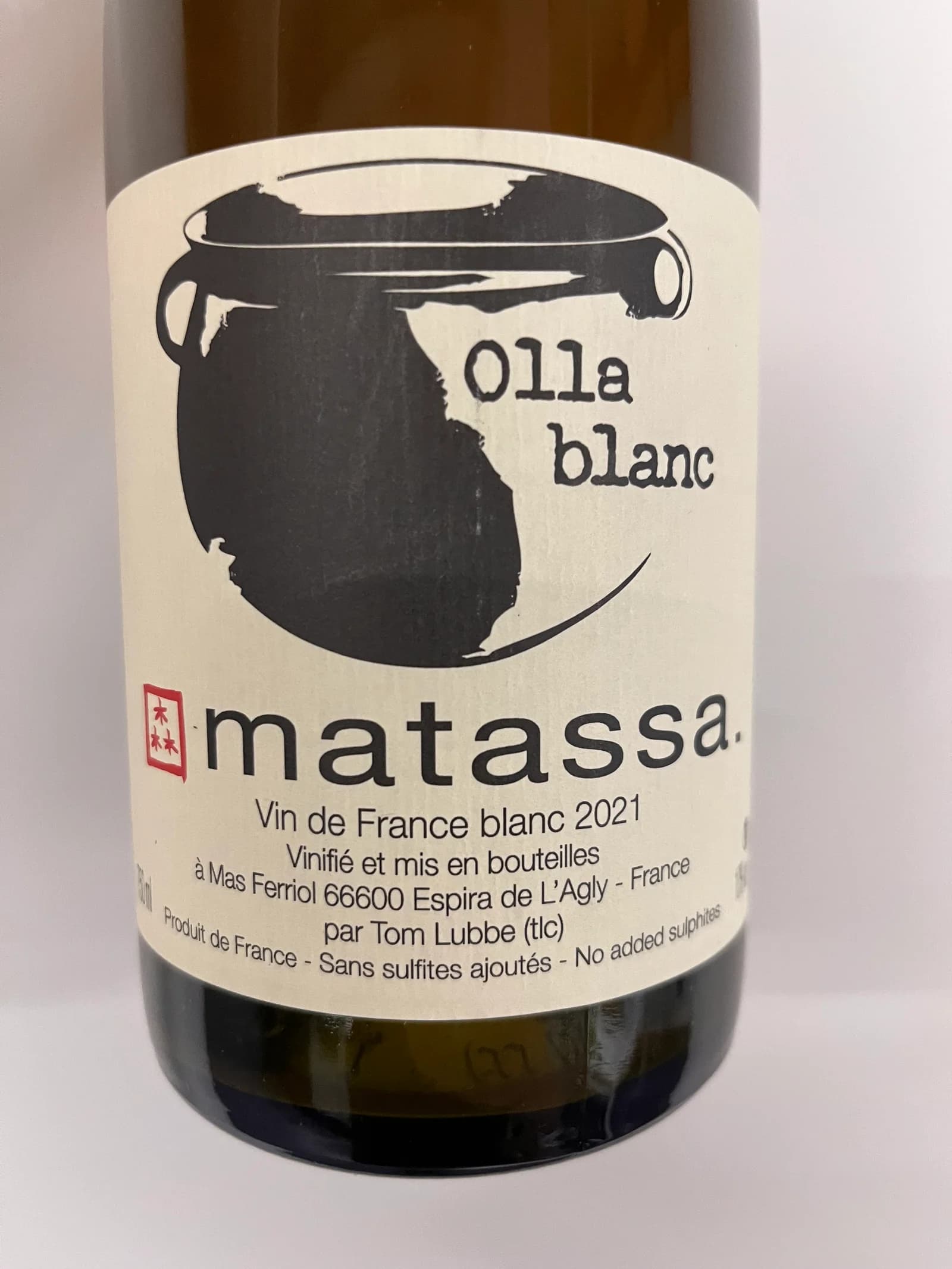
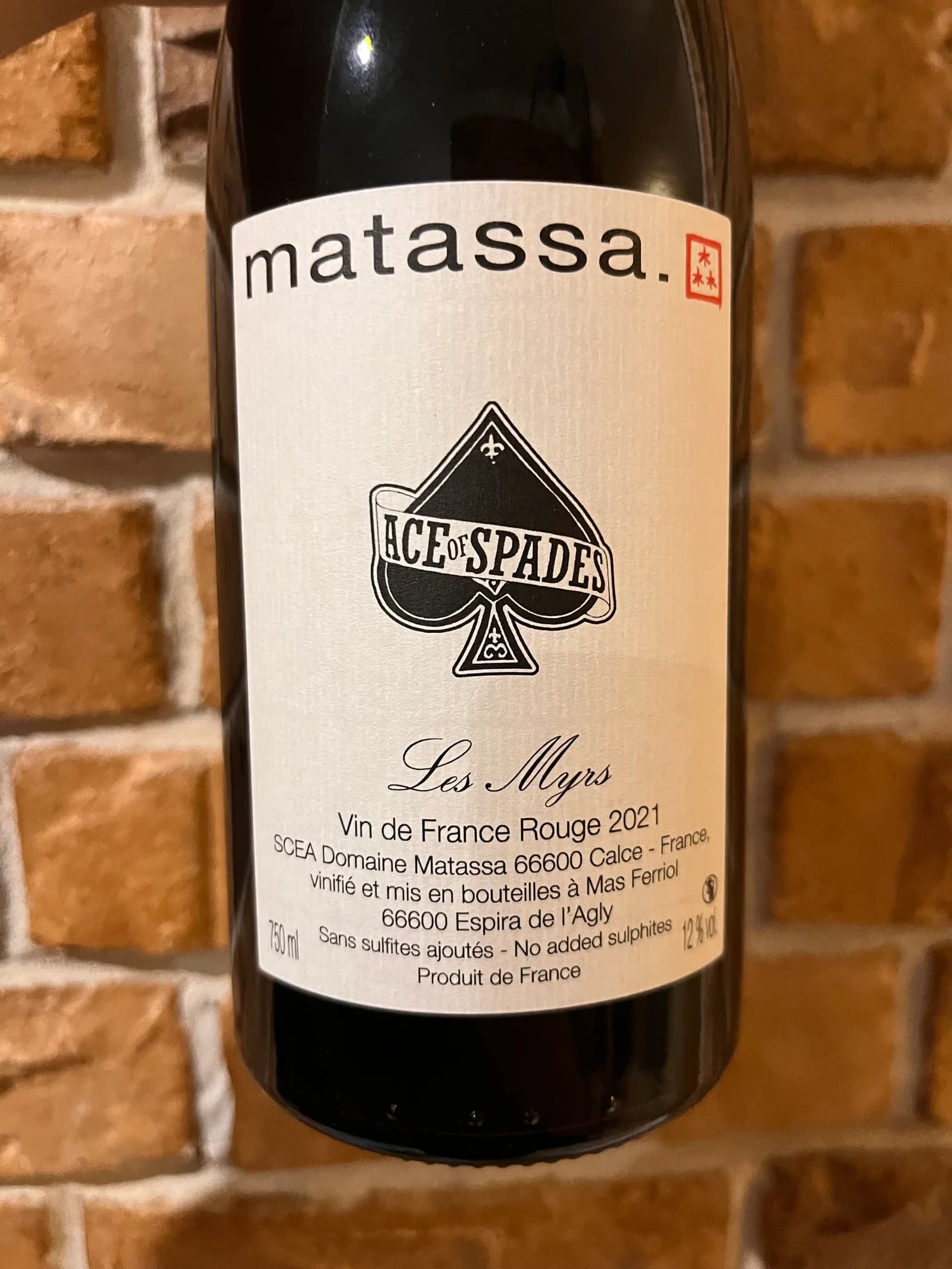
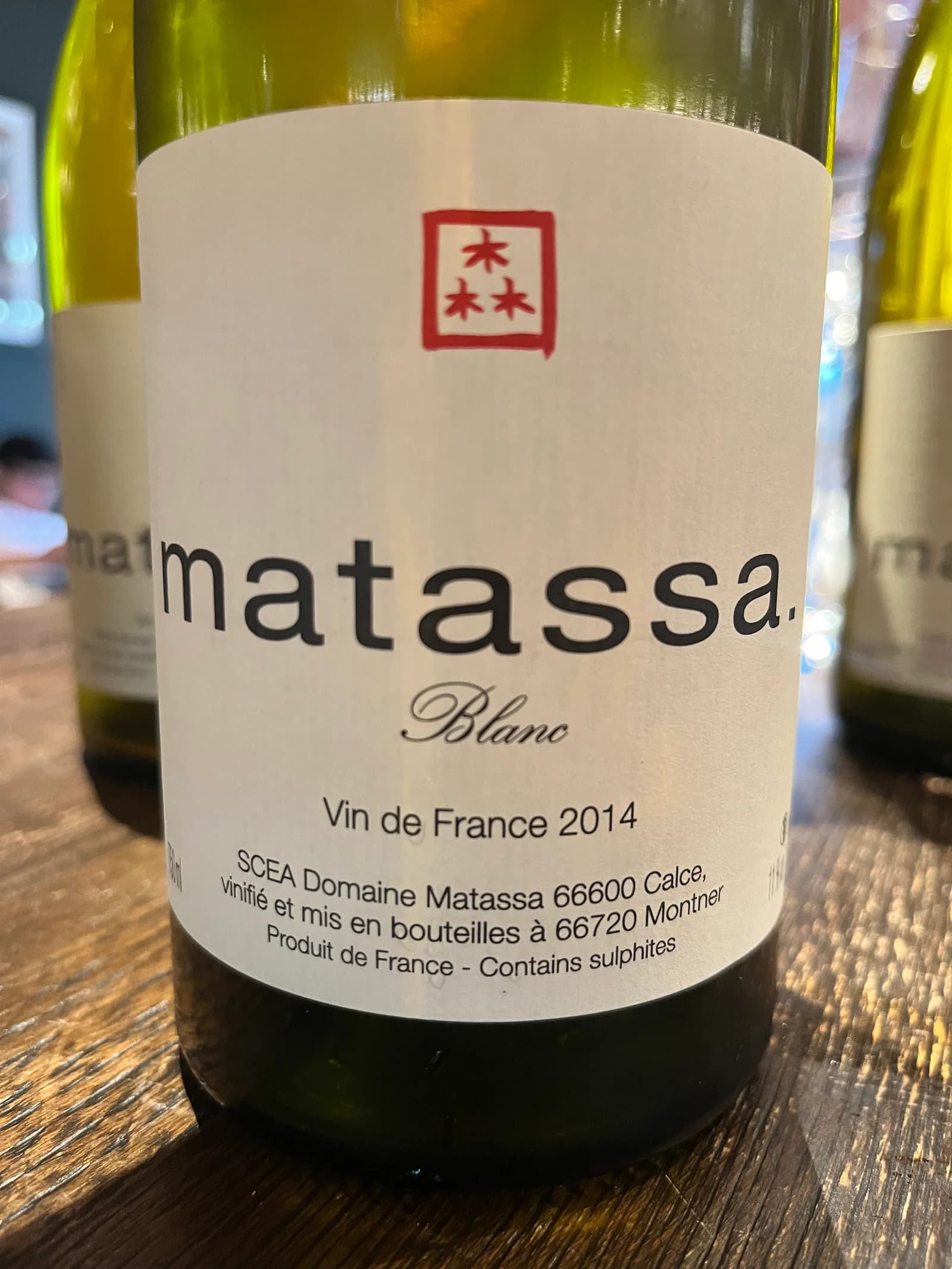
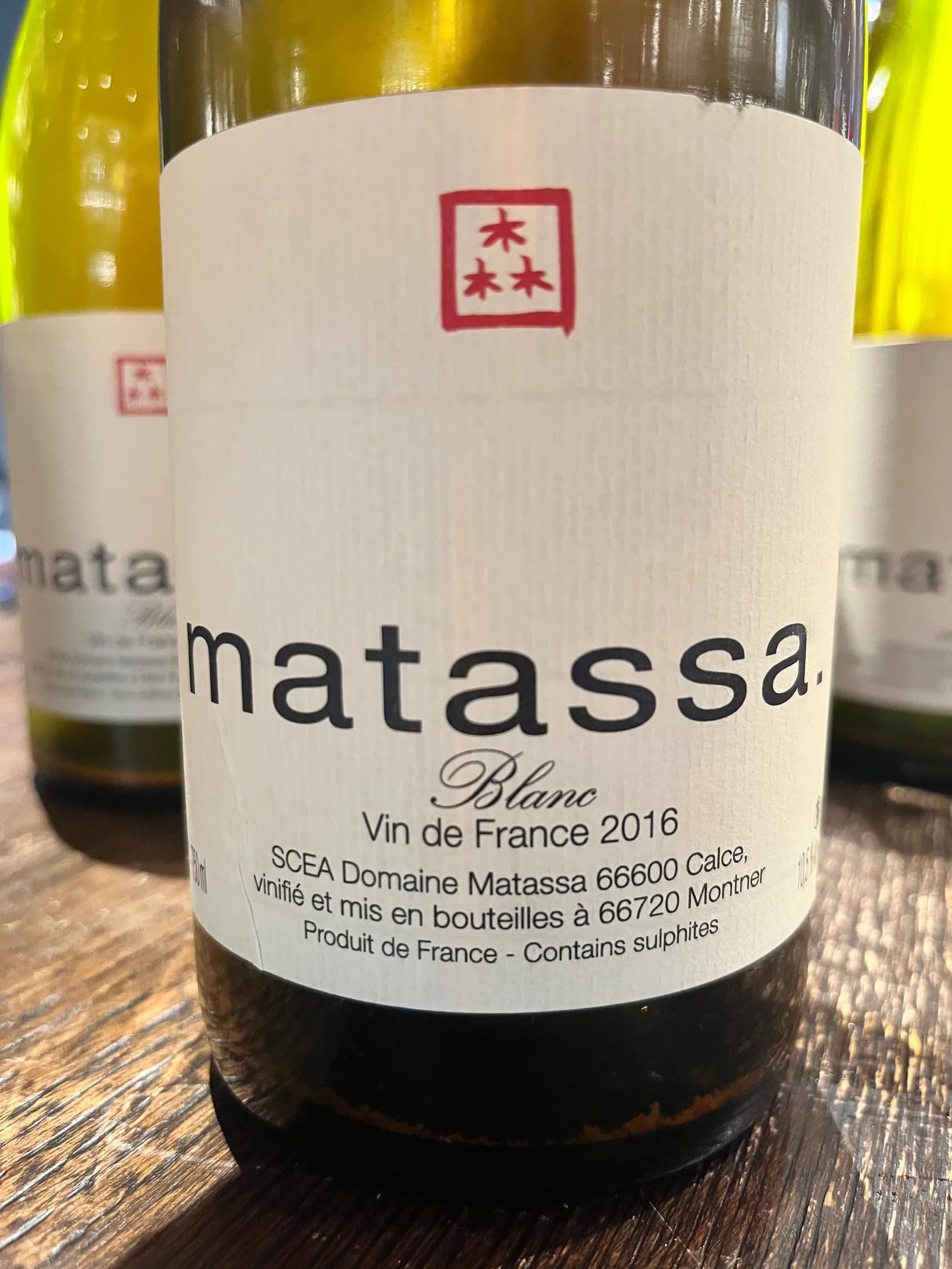
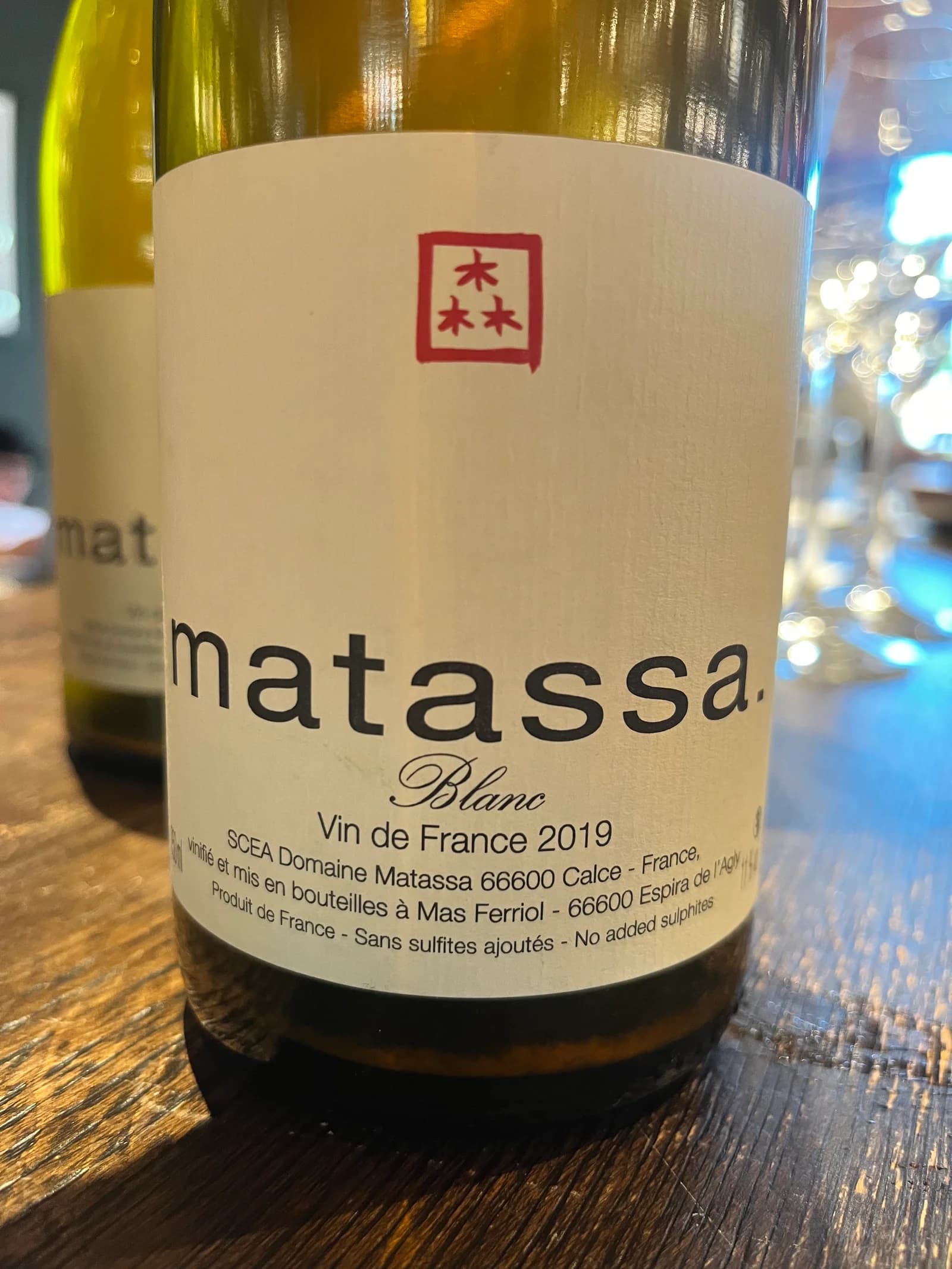
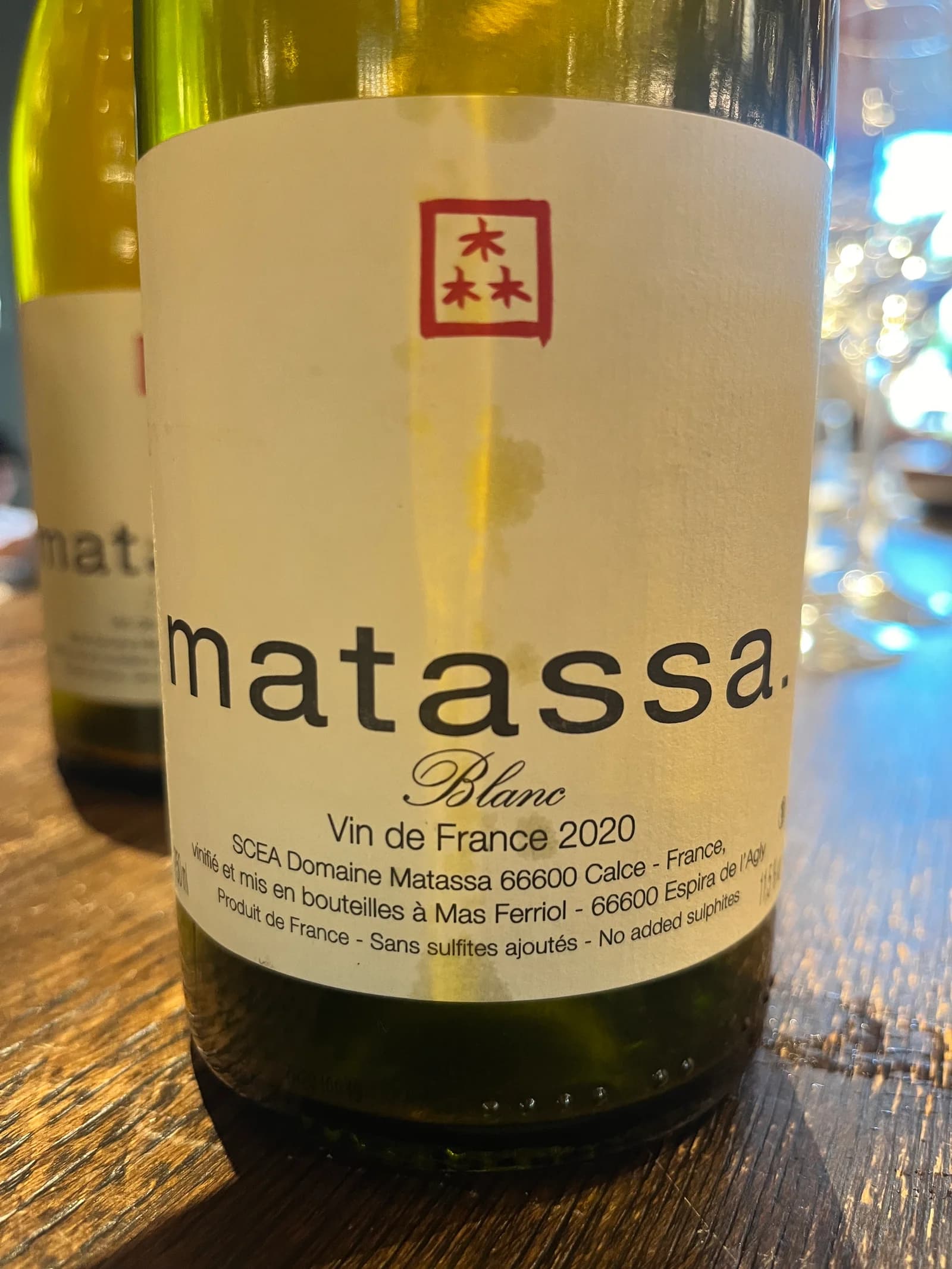
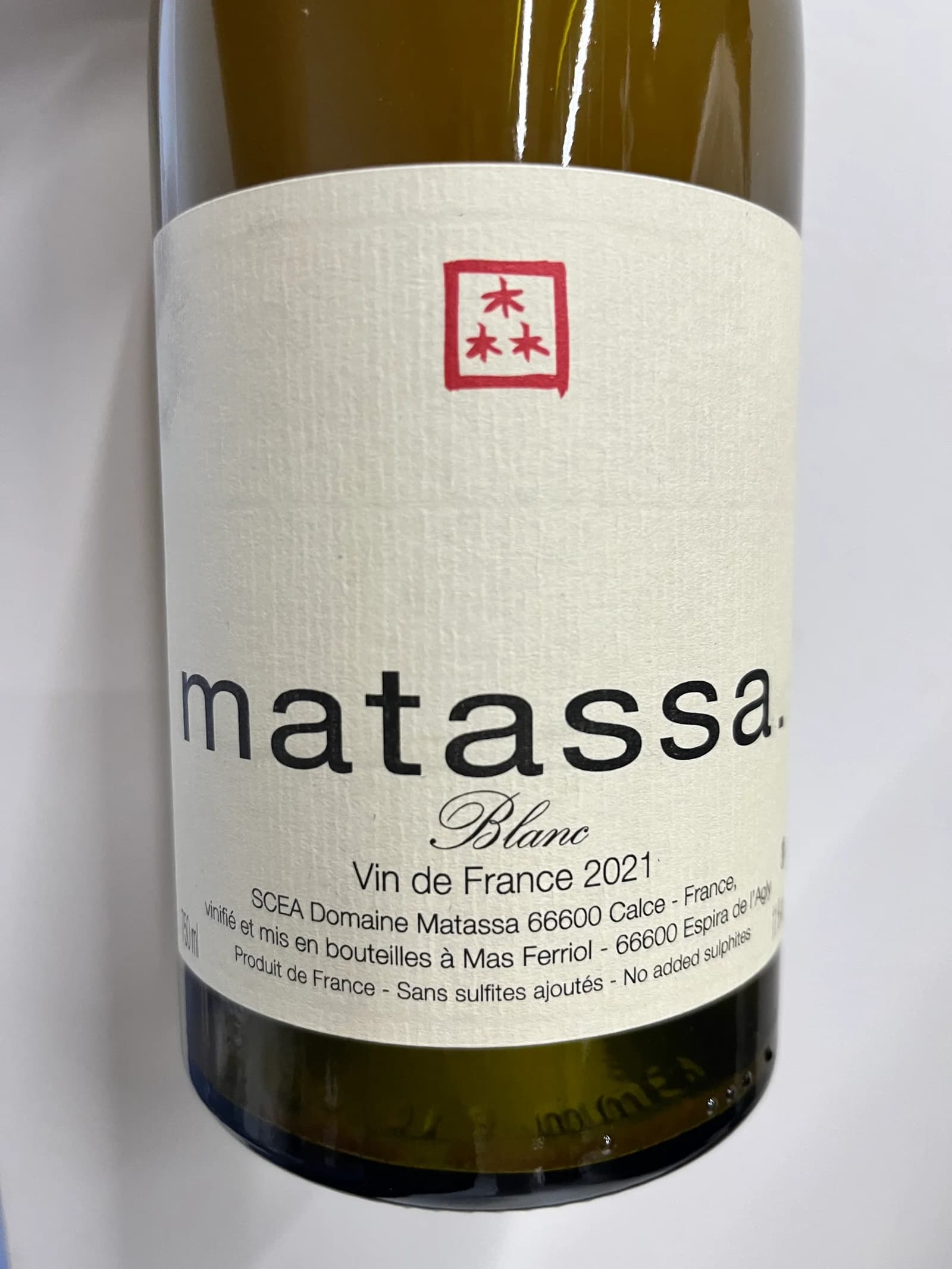
Olla Blanc
2021
Region
France › Vin de France
Type
white · still
Grapes
Muskateller, Macabeo, Zibibbo
Alcohol
10%
Volume
750 mL
Sugar
0.4 g/L
Tasting Notes
Served blind, and I was halfway clever - nailed Matassa immediately thanks to that signature minerality and low alcohol level, then completely whiffed on the cuvée and vintage. Story of my life. But what a wine to be wrong about. Everything's in the right place: fruit that actually tastes like fruit, minerals that sing rather than shout, herbs threading through like they belong there, and just enough funk to keep things interesting without going full farmyard. This drinks like breathing - effortless, necessary, gone before you realise you needed it.
This wine has evolved beautifully, maintaining its funkiness while becoming smoother and more rounded. The aroma profile includes persimmon, dried herbs, wet stones, kōcha kinoko, tropical fruits, and overripe oranges. Fresh and notably deep and wide, it finishes relatively long with lingering notes of persimmon and tea. A refined and engaging experience.
A delicious beauty. A wine to consume in huge quantities without any consequences. Dried apples, kōcha kinoko, dried field flowers, and oranges from the floor with subtle yeasty touch. Medium body, fresh and flavourful. Moderately funky. Quite sophisticated and well-balanced.
How come this wine is still freely available on the Good Wine shelves? Well, better for me as this orange blend of Macabeo and Grenache is delicious and fun to drink. Moderate funkiness, just enough to make it more interesting. Dried apples, kōcha kinoko, dried field flowers, and oranges from the floor with subtle yeasty touch. Medium body, fresh and flavourful.
About
This wine, named after its single vineyard origin, is a blend of Macabeo, Muscat Blanc à Petit Grains, and Muscat of Alexandria -- at least, that's what Louis/Dressner suggests. However, the web offers a mix of narratives about its production. Sourced from 45-year-old vines set in lime and clay, the grapes are known to undergo a whole-cluster maceration, but the exact duration on the skins is a topic of debate. Some sources mention a two-week period, while others claim it's only one week. Fermentation and aging take place in 2,000l concrete vats. In the absence of official technical sheets, the wine's actual maceration process remains a subtle mystery, inviting us to trust our senses and the wine's own story as it unfolds in the glass.